No Results Found.
The page you requested could not be found. Try refining your search, or use the navigation above to locate the post.
1 April 2026
The page you requested could not be found. Try refining your search, or use the navigation above to locate the post.
The page you requested could not be found. Try refining your search, or use the navigation above to locate the post.
Australia has entered a troubling new chapter in its externalisation strategy and use of the so-called ‘safe third country’ concept. Recent migration laws allow the Government to pay other countries, like Nauru, to accept refugees and other migrants in Australia under ‘third country reception arrangements’. This move follows the landmark 2023 NZYQ High Court ruling, which found indefinite immigration detention unlawful and led to the release of hundreds of people from detention, including those with criminal records. Instead of ensuring its policies enhance community safety while upholding human rights, Australia has expanded its deportation powers and sought to remove procedural safeguards. In October 2025, Australia began removals to Nauru, despite serious human rights concerns and limited oversight. This new form of outsourcing risks setting a dangerous global precedent, normalising the practice of paying less developed countries to take the refugees and migrants deemed undesirable.
For decades, Australia has deployed ever-harsher asylum and migration policies designed to shift its protection obligations under domestic and international law onto other countries or evade them altogether. People arriving by boat are turned back at sea or transferred offshore for asylum processing. Those who manage to arrive by boat and are later recognised as refugees are barred from ever settling permanently in Australia.
The Australian Parliament has passed legislation allowing the Government to pay third countries, such as Nauru, to accept migrants –including refugees– under so-called ‘third country reception arrangements’.[1] Initially, the Government sought to remove three refugees to Nauru, a country they have never set foot in and have no connection to (which the Government is calling ‘resettlement’).[2] It then entered into a memorandum of understanding (MOU) with Nauru to facilitate deportations there.[3] In October 2025, the Australian Government confirmed that the first removals had taken place under the MOU.[4]
This piece examines a new chapter in Australia’s externalisation strategy and adaptation of the so-called ‘safe’ third country mechanism. Nauru’s role has expanded beyond processing asylum seekers intercepted at sea by Australia. People who have lived in Australia for many years, with deep community ties, including family members and children who are Australian citizens, may now face removal to Nauru. Many of those affected are refugees or stateless. Rather than adopting rights-based asylum and refugee policies, Australia continues to undermine the human rights of refugees and asylum seekers, setting a dangerous global precedent.
In 2023 and 2024, Australia passed a series of punitive migration laws, which pose a serious risk to the human rights of refugees and asylum seekers.[5] This includes empowering the Government to enter into a ‘third country reception arrangement’ with a foreign country to accept non-citizens in exchange for payment. This includes refugees whose protection status has been ‘reversed’ (in other words, revoked) but who cannot be returned to their country of origin due to the risk of serious harm (refoulement).[6]
The laws also protect Government officials from being sued for any harm caused when people are removed from Australia after their visas are cancelled or refused, as well as for harm caused to people transferred to third countries under regional processing or third country reception arrangements.[7]
The Government was given unprecedented powers to:
The new laws were rushed through Parliament with minimal scrutiny and amidst widespread opposition, including from refugees previously detained in Australia’s offshore detention centres and from human rights, legal and community organisations.[10]
These new migration laws were enacted in response to the landmark 2023 High Court of Australia decision, NZYQ v Minister for Immigration, Citizenship and Multicultural Affairs.[11]
In this case, the High Court ruled that it was unlawful and unconstitutional for the Government to detain a person without a valid visa indefinitely in immigration detention when there is no real prospect of their removal from Australia in the foreseeable future. This decision overturned the system of indefinite immigration detention that had been in place in Australia since 2004 and the High Court’s decision in Al-Kateb v Godwin that it was lawful to detain people indefinitely.[12]
Since NZYQ, 358 people have been released from immigration detention, many of whom had languished in detention for years.[13] Most of the people released cannot be returned to their country of origin because they are refugees or stateless. They previously had their visas cancelled or refused on character grounds or for committing offences, and were placed in immigration detention, where they were to remain until granted a visa or removed from Australia.[14] Before NZYQ, this system resulted in people being detained for indefinite and prolonged periods, in some cases, more than 10 years and in one case, nearly 16 years, unable to be sent home or live in the Australian community.[15]
While the decision in NZYQ was celebrated as a victory for human rights, it was met with legitimate concern and questions about how the Government would ensure community safety and what mechanisms would be put in place to reduce the risk of reoffending for those who had been convicted of crimes and served prison sentences.[16]
It is important to note that, despite the High Court’s decision in NZYQ, individuals in Australia can still be held in immigration detention indefinitely if they refuse to consent or cooperate with removal to their country of origin. This applies regardless of the reason for refusal, including a well-founded fear of harm upon return, unless the individual lacks the capacity to consent due to medical, mental health or related reasons.[17] Some countries, such as Iran, do not accept involuntary returns of their citizens. As a result, individuals cannot be removed there unless they voluntarily consent and obtain the necessary travel documents.
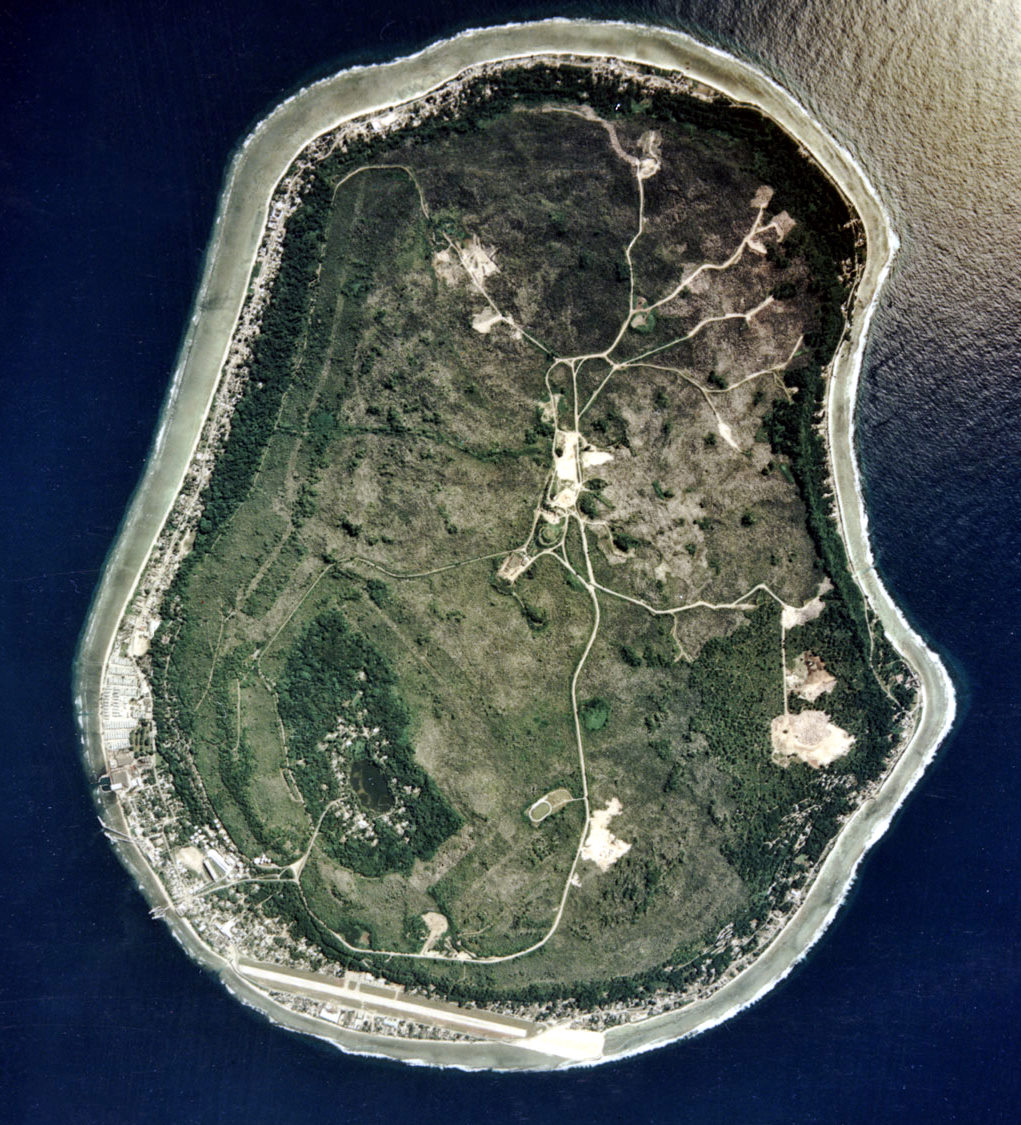
Nauru, a tiny island republic in the Pacific spanning just 21 square kilometres with about 12,000 people, has a relationship with Australia shaped by a history of exploitation and neo-colonial dynamics.[18] Today, the nation remains heavily reliant on Australian foreign aid.
In February 2025, the Government exercised its third country reception laws for the first time to strike an interim deal with Nauru to remove three people from the so-called NZYQ cohort.[19] The three men had served their prison sentences and were kept in immigration detention until their release following the High Court ruling.
Without notice, they were granted long-term visas to live in Nauru for at least 30 years. Under the agreement, they would have the right to work, move freely around the island and access social services.[20] They were subsequently re-detained pending removal to Nauru.
As of 28 February 2026, none appear to have been sent to Nauru due to ongoing legal proceedings against their removal.[21] In August 2025, the UN Human Rights Committee issued an urgent interim request to Australia not to remove one of the men, an Iraqi national, to Nauru while the Committee examines the human rights implications of his complaint. [22]
At the end of August, the Government passed a law stripping refugees and other migrants of their fundamental right to procedural fairness when removing them to third countries such as Nauru.[23] While the powers are said to only apply to people who have ‘exhausted all other options to remain in Australia’, the Human Rights Law Centre highlighted that ‘two of the three people initially targeted by the Government for deportation to Nauru had not yet completed all appeal options relating to their visas’.[24]
The law poses a grave risk to human rights by removing the requirement to give individuals notice and the opportunity to respond before a decision is made on their removal to a third country.[25] This includes the ability to raise fears about threats to their safety, access to healthcare, family separation and the risk of onward refoulement.
On 29 August 2025, Australia and Nauru formalised the arrangement, signing a MOU to facilitate removals to Nauru.[26] Australia agreed to pay up to $2.5 billion for the 30-year life of the agreement, specifically, an upfront payment of $408 million and $70 million each year.[27] The Government has said that the ‘MOU will allow the continued management of the NZYQ cohort’ and ‘contains undertakings for the proper treatment and long-term residence of people’ in Nauru.[28]
There is a lack of transparency surrounding the arrangements with Nauru, and no independent oversight or monitoring of conditions or the treatment of people sent there. Only a trickle of information has emerged.
The Minister for Home Affairs confirmed that an initial transfer to Nauru took place on 24 October 2025, but did not disclose the number of people transferred.[29] It was revealed in Parliament that, as of 10 February 2026, six people had been transferred to Nauru (excluding the three men subject to the interim deal).[30] It remains unclear how many people from the NZYQ cohort have been re-detained in Australia or issued visas for Nauru pending removal.
Two further issues are particularly concerning. First, information disclosed in Parliament indicates that the MOU does not impose a cap on, or specify, the number of people who may be sent to Nauru.[31] The laws allowing third country reception arrangements, alongside provisions allowing the denial of procedural fairness, could be applied by future Governments to a far broader group than the few hundred people in the NZYQ cohort.[32] Lawyers have warned that up to 80,000 people in Australia without a valid visa or on a removal pathway could potentially be affected, based on Department of Home Affairs figures from November 2024.[33]
Second, the MOU has not been made public, despite requests from parliamentarians for its release, with the Government claiming public interest immunity over the MOU and other details of the arrangement.[34] The Government has stated that compliance with the Refugee Convention is ‘important’ to both Australia and Nauru as signatories, and this commitment is reflected in the MOU.[35] It was also stated that Nauruan law incorporates the principle of non-refoulement, and that Australia could consider withdrawing funding in the event of non-compliance with the Refugee Convention. It nevertheless remains unclear how Australia will ensure that people transferred to Nauru are treated in line with international standards, especially given the non-binding nature of MOUs.
Australia’s new arrangement with Nauru is distinct from its longstanding offshore processing regime, representing a new modality of externalisation and variation of the ‘safe’ third country mechanism. Since 2012, asylum seekers arriving by boat without a valid visa have been intercepted at sea and forcibly transferred to Nauru or Manus Island in Papua New Guinea (PNG) for offshore processing. Australia continues to operate an Australian-funded Regional Processing Centre (RPC) in Nauru and send asylum seekers there. The last Government statistics from August 2024 report that there were 94 ‘transitory persons’ in Nauru.[36]
Australia must refrain from returning or sending individuals to any country where they would face persecution, serious harm or be exposed to chain refoulement, in accordance with customary international law and as a party to the 1951 Refugee Convention and other human rights treaties. Domestic law provides that a person owed protection by Australia must not be removed to a country where they fear persecution or other serious harm.[37]
There are serious concerns about the conditions and safety of asylum seekers and refugees sent to Nauru, with widespread evidence demonstrating that Nauru does not meet international standards to be considered a safe third country.
Numerous reports have documented serious human rights violations against people removed to Nauru for offshore processing, including prolonged and arbitrary detention, physical and sexual assault, inhumane conditions, inadequate health care and neglect, and widespread mental health problems and self-harm.[38]
As argued by the Human Rights Law Centre, which is representing the Iraqi man subject to removal to Nauru:
“Refugees previously sent to Nauru by Australia have been killed and suffered violence, medical neglect and discrimination. In Nauru, the man would also face the risk of being returned to Iraq where he faces persecution, and would be permanently separated from his family.”[39]
In 2024, media reports indicated that medical staff, caseworkers and asylum seekers described healthcare on Nauru as inadequate and extremely limited, lacking specialist services and any dedicated counselling for survivors of torture and trauma.[40]
An outbreak of dengue fever on the island led at least nine asylum seekers to contract the illness, including one man who was medically evacuated to Australia for critical treatment, only to be returned to the island amid the same life-threatening outbreak.[41] Refugees and asylum seekers have told the media that they cannot afford food and are forced to skip meals, despite the millions of dollars spent by the Australian Government on offshore processing.[42] The Asylum Seeker Resource Centre has also reported an increase in violent incidents against asylum seekers, including one case of severe beating.[43] These developments highlight ongoing concerns about security arrangements on Nauru.[44] There have also been serious allegations of corruption by senior Nauruan officials.[45]
In the recent case of TCXM v Minister for Immigration and Multicultural Affairs, concerning one of the three men initially subject to transfer to Nauru, the Federal Court of Australia accepted that the medical services available in Nauru are inadequate to treat the applicant’s severe, potentially life-threatening asthma. Nonetheless, the Court held that he could lawfully be transferred to Nauru.[46] The High Court of Australia is currently considering the appeal, with the appellant arguing that it is not reasonably practicable to remove a person to a country where there is ‘a real risk the person will not live, but will die’.[47]
There is also a serious risk of chain refoulement, with refugees potentially being returned to harm. In November 2025, a third-party translation of a public interview given by the Nauruan President in February 2025 was read into the Australian Parliament. In that interview, the President reportedly stated that people being transferred to Nauru ‘are not refugees’ and that Nauru may ‘over time … find a way to return them home’.[48]
The treatment and conditions of those transferred under the Nauru MOU remain unknown. The only confirmed information is that they are being housed in a former Regional Processing Centre (RPC) facility for Australia’s offshore processing regime. While the gates of this former detention facility are now open, the site remains surrounded by high wire fencing.[49]
As the United Nations High Commissioner for Refugees (UNHCR) has affirmed, a State that transfers asylum seekers or refugees to another State retains responsibility for ensuring effective protection in practice.[50] This obligation is unlikely to be met where transfers are to remote locations, such as Nauru, where monitoring is difficult. UNHCR has further clarified that lawful transfers should exclude people who have already been granted international protection, who should instead have legal residence in the host State.[51]
In January 2025, the Human Rights Committee ruled that Australia remained responsible for the arbitrary detention of asylum seekers transferred to offshore detention facilities in Nauru.[52] The two cases concerned 25 asylum seekers and refugees who were sent to Nauru in 2013 and 2014. Committee member Hélène Tigroudja issued a stark warning:
Therefore, should States (…) such as Australia, the United Kingdom or any European Union State, decide to keep on concluding similar memorandums of understanding for their so called “externalization of borders” policy in exchange for financial support, they remain accountable for human rights violations that would occur in the third country (…).[53]
Australia’s third country deportation powers and its new arrangements with Nauru risk setting a dangerous precedent. Under this approach, people can be removed without robust procedural safeguards, separated from their families and punished irrespective of how long they have made Australia their home. They may suffer harm in the third country, including detention, inadequate healthcare, targeted violence and refoulement.
Other countries may follow suit, offering incentives to encourage less developed countries to accept refugees with criminal convictions or deemed not of good character. Australia is undermining its commitments to international cooperation and global responsibility sharing as a signatory to the Refugee Convention and the Global Compact on Refugees. This approach effectively endorses a model in which wealthy countries can pay less developed countries, often former colonies, to assume the protection responsibilities of others, despite their limited resources and capacity to provide effective protection.[54]
Instead of doubling down on punitive and harmful measures and outsourcing its responsibilities, Australia should urgently reverse course to ensure its laws and policies uphold its human rights obligations and the rule of law. It should invest in community-based programs that enhance community safety while protecting the rights and dignity of migrants.